
Booking a chalet direct with the owner rather than through a tour operator changes neither the building nor the people who will cook, drive and teach your group during the week. It changes who picks up the phone, what you can negotiate, and how much of the holiday you have to assemble yourself.
One thing worth saying early: your chalet in Chamonix is let under French law, whoever sold it to you. That matters more than most British guides admit, and it comes up several times below.
- A tour operator sells a package: flights, transfers, chalet and often lift passes. An owner sells a house. Comparing the two on price alone compares two different things.
- A French letting agency charges the owner roughly 15 to 25% of the rent. Owners letting direct keep that share, and most of them hold their price rather than passing it on.
- Whoever you book through, French law sets what the rental contract must contain, and the difference between arrhes and acompte decides what happens if anyone cancels.
- Private chefs, drivers and instructors come from the same small pool of people in the valley, so the service you can arrange is much the same either way.
Who is actually selling you the chalet
Four kinds of business use the same photographs and the same enquiry form. What separates them is who owns the building, who takes your money, and who answers the phone in February.
| Who you book with | Who owns the chalet | Who takes your money | Who you ring during the week |
|---|---|---|---|
| The owner, direct | They do | They do | The owner, or their chalet manager |
| A French letting agency | The owner | The agency | A booking office, with a local contact in resort |
| A tour operator | They lease it for the season, or own it | The tour operator | Their own staff, usually living in resort |
| A booking platform | The owner | The platform | The owner, with the platform stepping in for disputes |
The chalet manager is worth explaining, because the term is used loosely. This is the local company or individual who opens the house, meets your group, handles the linen and gets a plumber out on a Sunday. They work for the owner, but they are the person you will actually deal with.
What a tour operator package really buys you
This is where the British market differs from the French one, and it is a real advantage rather than a marketing line. A tour operator sells the whole week as one purchase: flights from a regional airport, a coach or minibus from Geneva, the chalet itself, staff, and often lift passes and equipment hire.
Put that together yourself and you are making five bookings instead of one, each with its own cancellation terms. For a first trip to the Alps, or for a group flying in from different cities, that is worth paying for.
The trade-off is fit. Packages run Saturday to Saturday or Sunday to Sunday from a handful of airports, and the chalet you want has to be one your operator happens to have that season.
A package also moves in one piece. Change the dates and the whole thing gets repriced, flights included, whereas five separate bookings can be adjusted one at a time.
What the package includes at the chalet is a separate question, and in Chamonix the answer is rarely the fully staffed week British groups picture: catered, self-catered and everything between.
Booking direct does not remove the middleman's cost from your bill
A French letting agency commonly charges the owner 15 to 25% of the rent. Pay €100 to the agency and it keeps €15 to €25, with the owner receiving the rest. None of this is itemised on anything you see.
Owners letting direct keep that share, and there is nothing to make them hand it back to you. Plenty hold the price they charged through an agency and pocket the difference, which is why most requests for a discount go nowhere.
Platforms work differently, and this is the one case where booking direct genuinely lowers what you spend. Their service fee is added to the owner's price and charged to you, so you can see it, and it disappears when you deal with the owner.
Room to manoeuvre is what direct booking really buys. Owners set their own terms without asking anyone, so things that are fixed elsewhere become negotiable: your arrival day, the length of the stay, what is included and what is dropped. Quiet weeks in January and March bend far more easily than half term, which will let anyway.
As for the amount, the week you choose counts for far more than who you book through.
Bonami's tip: put the dates, the number of adults and children, and what you are looking for in your first message. A three-line enquiry gets a useful answer the same day, whereas "are you available?" starts three rounds of email before anyone has said anything.
Where an agency still wins: the choice
An agency or an operator does something an owner cannot. They hold dozens of chalets, winter and summer, sometimes across several valleys. An owner has one house: if your week has gone, the conversation ends there.
So use an agency if you have not settled on a resort, or if your dates are fixed and the house itself matters less. The same goes for comparing twenty properties in one conversation, or for a group where nobody has organised a trip of this size before.
Booking direct assumes the opposite. You know where you are going, you have found a house, and the checking is now yours to do.
Your contract is French: what that means in practice
Most British guides skip this, and it is the part that actually protects you. A chalet in Chamonix is let under French law even when you book it from London, and French law is specific about what the contract contains.
Checking the house and protecting your money
| What to ask for | Why |
|---|---|
| A video call from inside the chalet, at a time you choose | It shows the house exists, that it matches the photographs, and that your contact can actually get into it. Ask to see the bedrooms one by one |
| The exact address, or at least the hamlet | "Chamonix" covers the town centre and hamlets a twenty-minute drive away. Put it on a map before you assume anything about walking to a lift |
| The registration number of the meublé de tourisme | It confirms the let is declared to the town hall. This is paperwork filed online, so it tells you nothing about the state of the building |
| The star rating, if the house has one | An accredited inspector visited and measured what they found. Ratings are voluntary, so plenty of good houses have none |
| A written contract before any money moves | French law fixes what it must contain, and the list is below. An owner who will not put the week in writing is telling you something |
| A breakdown of what the rent covers | It shows what still has to be paid on top: end-of-stay cleaning, linen, heating, tourist tax. This is the commonest argument at the end of the week |
| Payment to an account in the owner's own name | It confirms the money is reaching whoever signs the contract, rather than a third party you know nothing about |
| A payment schedule rather than the full sum up front | You hand over less before anyone in your group has set foot in the house |
French law requires the rental contract to state seven things:
- the names and contact details of both parties
- the address and a description of the property
- the arrival and departure dates and times
- the price and how it is to be paid
- the damage deposit and the terms for returning it
- the cancellation terms
- the maximum number of occupants allowed
That last clause deserves a second look when there are fourteen of you. It is what decides whether your whole group can legally sleep in the house.
People confuse the registration number with the star rating constantly. Declaring a holiday let to the town hall is compulsory everywhere in France; on top of that, towns that have adopted the scheme issue a registration number to be quoted in adverts. The rating is a separate and entirely voluntary process: one to five stars against a national list of 112 criteria, awarded after an accredited inspector visits.
Be clear about what that buys you. A rating means somebody walked through the house and measured it. It says nothing about how faithful the listing is, or how this owner treats guests. No certificate covers that, only the conversation you have with them.
What the contract should cover when you are booking for a group
You are signing alone for thirteen other people, you are probably fronting the first payment, and you will be collecting from friends who may change their minds. Get these in writing.
- What happens if the group drops from fourteen to twelve. When you rent a whole house the price usually stays put, but you want to know that in November rather than in February.
- Swapping one guest for another, which should not require a new contract.
- The deposit: how much, what it covers, whether it is actually taken from your account or simply held, and how quickly it comes back. You are the one who will settle up with everyone else afterwards.
- A payment schedule early enough that you can collect from the group before your own instalments fall due.
Travel insurance is bought separately, from an insurer or sometimes through the owner. Read what it covers: it pays out when you cancel the trip for an insured reason, not when two friends drop out and leave you holding their share. That second case is settled in your contract and in whatever you agreed with your group.
Ask whether the first payment is arrhes or acompte. The two words are not interchangeable in French law, and the difference cuts both ways.
If you cancel: with arrhes you lose what you paid; with an acompte you still owe the full price, unless the owner relets the week.
If the owner cancels: with arrhes they owe you twice what you paid; with an acompte they refund you and compensate your loss. Force majeure removes these obligations either way.
Read also: The Chalet Bonami room by room
Direct, agency or operator: which one for your trip
| Your situation | Go with |
|---|---|
| The resort is not settled and you are comparing valleys | An agency or operator |
| You want flights and transfers handled as one purchase | A tour operator |
| Your dates are fixed and the property matters less | An agency |
| You have found a house and want to speak to someone who knows it | Direct |
| You want to move the changeover day or adjust what is included | Direct |
| Nobody in the group has organised a trip of this size | An agency |
| You want to negotiate the price | Direct, but do not count on it: most owners hold their rate |
| You want the cheapest possible week | Neither: the week you pick decides that, not who you book through |
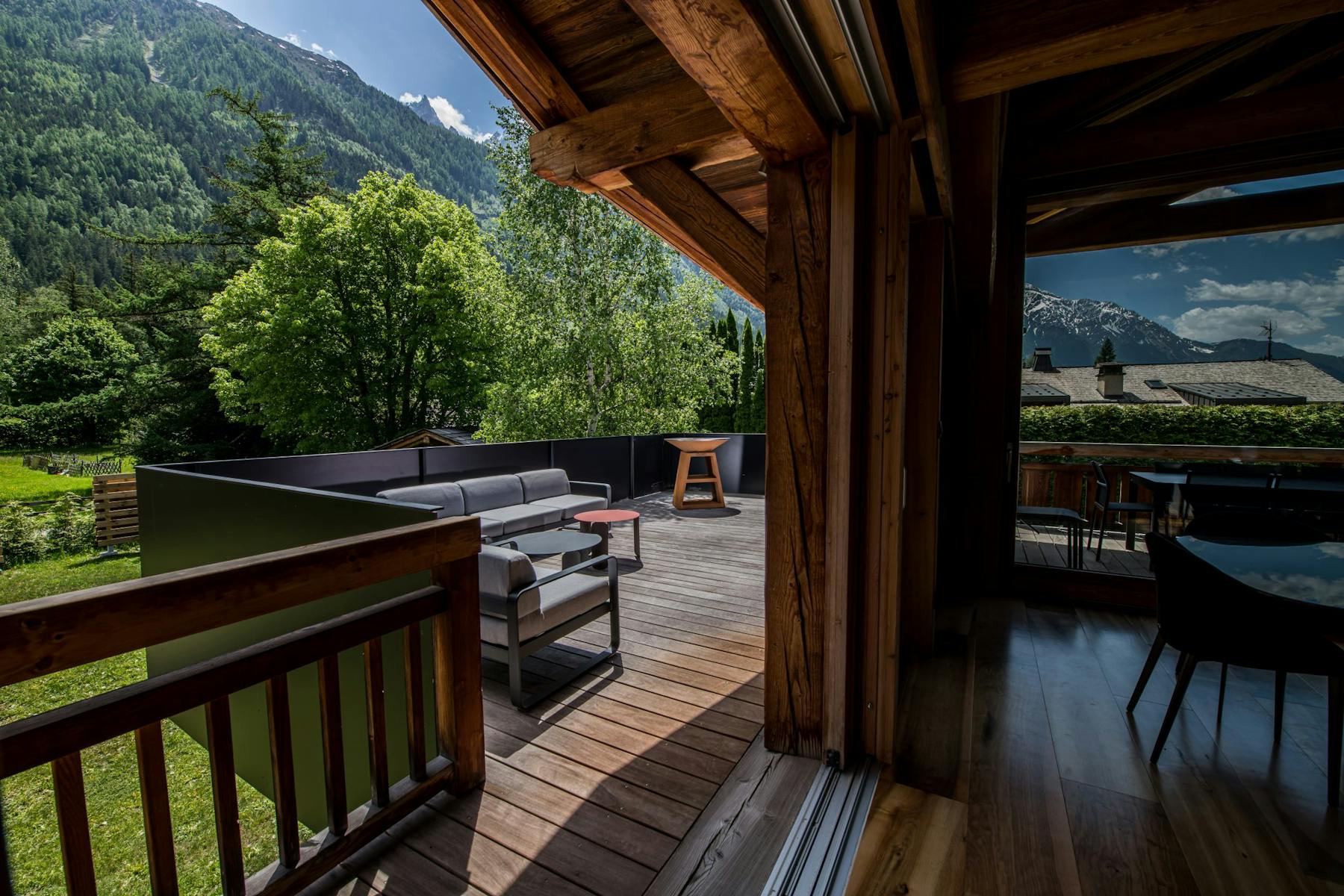
Talk to someone who lives in the valley and you get detail no listing will give you. Chalet Bonami is in Les Bois, a hamlet 3 km (2 miles) from the centre of Chamonix and 550 m (600 yards) from the Flégère gondola up to the ski area. "Close to the lifts" can mean a short walk or a twenty-minute drive, depending on which hamlet the house sits in.
Chalet Bonami is let direct, sleeps fourteen, and takes enquiries in English: tell us your dates.
Read also: Les Bois and the Chamonix valley, seen from the chalet
Common questions about booking a chalet direct
These come up on almost every group enquiry.
Is booking a ski chalet direct with the owner cheaper?
Not automatically. A French agency's commission of 15 to 25% comes out of the owner's share and never appears on your bill, so nothing forces an owner letting direct to charge less. The exception is booking platforms, whose service fee is added to your side of the transaction and does disappear when you deal with the owner.
What should I check before paying a deposit to a chalet owner?
A written contract carrying the seven clauses French law requires, a video call from inside the chalet, and a bank transfer to an account in the owner's name. Three things should stop you: an owner who will not do a video call, a listing whose wording appears word for word on other sites, and a demand for the full amount before anything is signed.
What is the difference between arrhes and acompte in a French rental?
Arrhes let you walk away and lose what you paid, and an owner who pulls out has to return double. An acompte binds both sides more tightly: you still owe the full price, and they refund you and compensate your loss if they cancel. If the contract does not say which applies, have it written in before you sign.
What do I take on by not booking a package?
The legwork of putting it together, and the chasing that goes with it. Flights, transfers and the chalet each carry their own terms and their own cancellation rules, so changing one does not move the others. In exchange you pick your airport, your dates and how long you stay.
Can fourteen of us book a chalet without going through an operator?
Yes, provided the group side is written down: the maximum number of occupants allowed, what happens if someone drops out, whether guests can be swapped, and a payment schedule that leaves you time to collect from everyone. Ask as well whether the deposit is actually taken or merely held, since that changes what you need in your account and when.